
Bees buzz between basil plants going to seed. The last peppers curl from under leaves like ruddy flames. Hay, marigolds, and my black t-shirt warm in the sun, releasing a smell that is both spicy and sweet. The garden is fading. Leaves fall lazily, a few at a time. Nothing out here is rushing today. Everything, on its own time, is turning crunchy and brown.
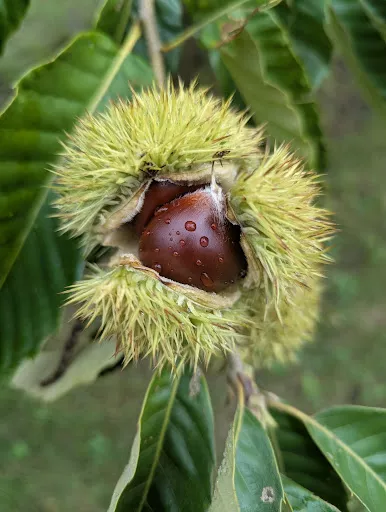
Plants are born tender and pliant; dead, they are brittle and dry. Thus whoever is stiff and inflexible is a disciple of death. Whoever is soft and yielding is a disciple of life.
This Lao Tzu quote has been on my mind this October, this springtime of death, as both Dancing Rabbit and I complete our 29th birthdays–our tender green shoots getting more fibrous, our bark hardening. As we enter the last year of our 20s, what does it mean for us to be disciples of life?
DR and I were born in the late ‘90s, a time when the environmental movement looked different than it does today. Some issues that were of deep concern at that time have been mitigated, some solutions that seemed incredibly hopeful have proven ineffective, and some struggles that didn’t exist have now come to the foreground. This leaves us with the sometimes painful task of evolving to meet the world, and ourselves, where we are now.
What does it look like to remain soft and flexible in a mature body, community, or organization? How do we honor the wisdom of hard-won lessons while remaining open to new ones? Where is the line between strength and brittleness?
Plants are born tender and pliant, but they do not stay this way forever. Eventually they take on greater form, shape, and structural integrity. They grow the capacity to bear the weight of fruit and endure harsher conditions. I often say I love being an adult and equally love living in a mature intentional community where I don’t have to build everything from the ground up. This way I can reap the sometimes literal fruits of my fore-Rabbits’ hard labor, while elaborating on their previous work. At the same time, this gift of structure also comes with its requisite challenges.
Whoever is stiff and inflexible is a disciple of death. What bends a young body might break an old one, and Dancing Rabbit can be less tender and pliant than I, and other younger and newer people, might hope for. When I first moved to Dancing Rabbit, I quickly identified many things I wished to change and update and spent a lot of time angry and demoralized when I encountered resistance, or insistence that things were a certain way for a reason. When I think about it, I often feel the same way when I encounter something in myself that I want to change, only to discover my own internal resistance; my own little chorus of voices saying: we do this for a reason!
Making change in established organizations isn’t easy. When a community is in its infancy, anything is possible; dreams and visions split off in infinite directions. When a community is in its youth, previous choices and a growing personality pare down the possibilities into finite but trainable stalks. When a community matures, it has its own weight, its own gravity, its own momentum. Evolution requires more work, more time, more patience. Retraining a sapling is different from retraining a full grown tree. Does this mean the mature tree is a disciple of death that must strive to once again be like a tender shoot? Does this mean that a mature tree should be cut down so it can regrow from the roots?
Revolution or reform? In the big picture, I cannot say. What I can say is that my approach to helping Dancing Rabbit, and myself, evolve has come to be deeply informed by the practice of deep listening and awareness of where an issue lies, rather than judging something as either good or bad, right or wrong, alive or dead. In the end, the change is happening whether I try to control it or not, in its own time. Revolution or reform? In the big picture, I cannot say. What I can say is that my approach to helping Dancing Rabbit, and myself, evolve has come to be deeply informed by the practice of deep listening and awareness of where an issue lies, rather than judging something as either good or bad, right or wrong, alive or dead. In the end, the change is happening whether I try to control it or not, in its own time.

Emeshe Amade is co-executive director of DR’s nonprofit, the Center for Sustainable and Cooperative Culture.